-->
Showing posts with label cytokines. Show all posts

Monday, December 23, 2013

The Link Between Autoimmunity and Infectious Disease


Autoimmunity occurs when the immune system begins to wrongly attack self-antigens or various parts of the body it’s responsible for protecting. There are mechanisms in place to prevent this kind of problem, while still allowing B and T-cells the variability needed to combat a wide array of pathogens (disease causing agents). Mechanisms are in place during the production of B and T-cells that check them for auto reactivity, such as central and peripheral tolerance. The breakdown of these tolerance mechanisms causes autoimmunity. When central tolerance mechanisms breakdown, auto reactive B-cells escape negative selection, in the form of apoptosis (cell death), and are released into the lymphatic system. It is when these auto reactive B-cells become aberrantly activated through things like B and T-cell discordance or T-cell bypass that an attack on host tissues begins.
            Some autoimmune diseases are caused by the production of autoantibodies against self-molecules, which are produced when auto reactive B and T-cells escape tolerance mechanisms. The production of autoantibodies against key components in the immune system, like inflammatory cytokines (signaling molecules) can negatively affect the ability of the immune system to effectively clear pathogens and prevent disease. In other words, autoimmunity can predispose people to infection by various pathogens, which they would normally be able to eradicate if their immune system was uncompromised.
            One of the most vital aspects of the immune system is the ability of the various immune cells to effectively communicate with one another and influence the environment around them. This is done through the use of signaling molecules known as cytokines. They are a diverse group of soluble proteins, peptides or glycoproteins that are secreted by specific immune cells in order to elicit a specific response. Therefore many times when an infection is detected inflammatory cytokines such as TNF-α are released, which induces things like vasodilation. Thus, by increasing the amount of immune cells flowing to the site of infection the environment around the pathogen is effectively skewed to favor the immune system. Cytokines can also act as effector molecules to polarize T-cell responses in order to rid the body of the pathogen in the safest and most effective way possible. For instance, if an extracellular pathogen like Streptococcus (the bacteria that causes strep throat) began to infect your nasal system you would want a Th2 (antibody mediated) response to be deployed as opposed to a Th1 (CTL mediated) response. A Th2 response is much safer and more effective against extracellular pathogens because, unlike a Th1 response, a Th2 antibody-mediated response doesn’t involve the release of cytotoxic granules or pro-inflammatory molecules, which could really damage these sensitive tissues. In order for a T-cell response to be skewed towards a Th2 response the cytokine IL-4 must be present and continue to remain in the environment. So, if a person suffered from an autoimmune disease, which produced autoantibodies against IL-4 they would be unable to effectively combat extracellular pathogens like Streptococcus, and in a sense they would be classified as immune compromised.

Thursday, December 5, 2013

See See How CCL19 Effects Eosinophilic Pneumonia


Eosinophils are granulocytes that contain basic granules (i.e. secretory vesicles) that kill large parasites and are linked to various forms of allergies.  Eosinophilic pneumonia (EP) is a broadly defined disease that is characterized by an infiltration of eosinophils in lung alveolar tissue.  EP includes Churg-Strauss Syndrome (a rare autoimmune disease), chronic EP and acute EP (the difference between the two is the presence of eosinophils in the blood/tissues and only the tissue, respectfully).  Individuals with EP are often found to have an increased concentration of macrophages and dendritic cells, important innate immune response mediators.  Symptoms include shortness of breath, weight loss, fever, and even respiratory failure, while causes range from parasitic infection, immune system dysfunction, medication, and environmental stimuli like tobacco smoke and dust.  Although symptoms can be serious, few is known about the cellular mechanisms behind EP, specifically macrophage and DC recruitment into the lungs.  Therefore in response, Nureki et al. investigated EP further by seeing if either, both, or neither CCL19 and CCL21 (molecules that attract motile cells with a specific receptor to a specific location) bound to CCR7 expressed on DCs and macrophages, homing them into the lungs.
In order to extract cells present in alveoli of patients with EP and control individuals as noninvasively as possible, the researchers performed Bronchoalveolar lavage (BAL).  BAL is a procedure in which fluid (BALF) in released into the lungs and recollected (via bronchoscope.  Once BALF was collected, cytokines/chemokines were measured by enzyme-linked immunosorbent assay (ELISA), which is used to measure the concentration of antigens via antibody (complementary binding molecules) detection.  Finally, levels of proteins on cell surfaces were detected by immunocytochemistry, a technique that uses antibody binding and further bound-antibody detection.

Sunday, November 3, 2013

Th17 Cells Play a Role in Alzheimer’s Disease


Neuroinflammation mediated by Th17 cells in the brain has been linked to the neurodegeneration characterized in Alzheimer’s disease.1

Alzheimer’s disease (AD) is the number one cause of dementia, which is classified as a loss of cognitive functioning due to neurodegeneration. AD is most common in people over the age of 60, and over 5 million Americans are estimated to have the disease. With the “baby boomer” generation entering this age group, increased understanding of AD is even more important in order to treat an aging population.


Healthy Brain vs. Alzheimer's Disease Brain
Many changes occur in the brains of people with Alzheimer’s disease. For an interactive tour of these changes, click here. Changes to the hippocampus and cortex are responsible for increased memory loss and decreased cognitive function. An overall shrinking of the brain and increase in the size of the ventricles occurs. These changes increase over time and are irreversible.

Currently, the most well understood cause of Alzheimer’s is due to a buildup of amyloid-β (Aβ) plaques.2 These plaques develop when a protein called APP is cleaved by enzymes to create Aβ. The hippocampus and neocortex of the brain are most vulnerable to the plaques, which are responsible for behavioral and functional deficits of AD.2 However, new research has targeted neuroinflammation as an important component in AD progression.3 Some experiments have shown that inflammatory mediators stimulate APP breakdown to further contribute to the disease.3


In a recent experiment conducted by Ju Zhang et al., the effects of Th17 immune cells in the brain of AD-model rats were studied.1 Th17 cells are a type of differentiated helper T leukocyte. Helper T cells are characterized by the presence of the coreceptor CD4 and are important for adaptive immune function. Th17 cells specifically are responsible for inflammation through the release of cytokine “danger signals,” such as IL-17 and IL-22 and for autoimmune response.1

Based on the knowledge that Th17 cells are involved in neuroinflammation and in Alzheimer’s brains, Zhang et al. hypothesized that Th17 cells are directly responsible for neuronal cell death through the interaction of transmembrane proteins Fas and FasL.1 Fas and FasL are well-known receptors and ligands, respectively, which are involved in a pathway for apoptosis (programmed cell death). Fas exists on neurons, and FasL is located on the surface of Th17 cells.1 The binding of these proteins is able to occur in AD brains, because a faulty blood-brain barrier (BBB) allows T cells to cross it, leading to elevated levels of Th17 cells in brain parenchyma.4 This does not occur in healthy brains, and, as we can see, has negative effects.


Sprague-Dawley rat
To test the hypothesis, it was necessary to induce rats to develop brain changes that would imitate AD. In this experiment, 4-month-old Sprague-Dawley rats were used.1 Aβ was injected into the hippocampi to induce neurodegenerative changes that have been shown to imitate both pathological and behavioral characteristics of AD.5 Rats were studied 7 or 14 days following the injection. APP expression was upregulated and neuron loss occurred and the changes showed greater progression in AD-like changes from 7 to 14 days.1

The study also demonstrated the effect of AD on the BBB of the rats. The BBB was shown to be impaired through the presence of immunoreactive cells for RORγ in the hippocampus of AD-model rats compared with control and saline-injected rats.1 RORγ is a transcriptional factor specific to Th17 cells, and RORγ-positive cells indicate that the BBB in AD brains is faulty and allows Th17 to leak into the hippocampus.

Wednesday, October 16, 2013

Lack of Endogenous IL-10 Enhances Production of Pro-inflammatory Cytokines and Leads to Brucella abortus Clearance in mice


As we all know cytokines help us fight off pathogens by molecular signaling with the use of IFNs and ILs. IL-10 regulates helps balance pathogen clearance and immune response. Brucella abortus is a chronic inflammatory disease which can be found in humans as well as animals. Previous studies have shown that IL-10 is a critical cytokine for inflammatory response in the host and prevents damage. Another study by Fernandes and Baldwin, showed that anti-IL-10 resulted in up to 10-fold fewer bacteria in the spleen with mice infected with the same strain of Brucella. IL-10 directly affects IL-12 by down regulating it and presents a feedback loop which ensures there is not excessive inflammation. In this current study by Corsetti et. al. published in September 2013 he set out to find out the results of IL-10 in bacterial clearance, inflammatory response, and aftereffects of being infected with Brucella abortus.

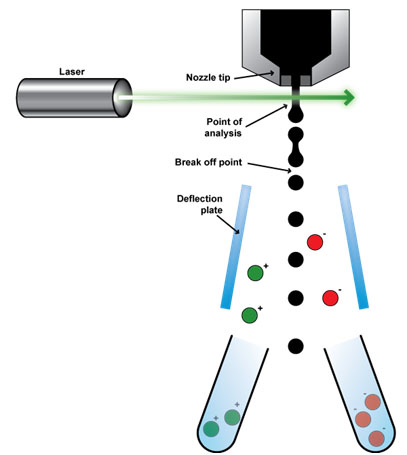
In order to test this, two sets of mice were studied, the wild type and the IL-10 KO (knock-out). Blood marrow cells were collected and cultured in DMEM in order to culture bacterial cells. After 10 days, the cells were infected with Brucella abortus and assayed for concentrations of IL-10, IL-12p40, or TNF-alpha. Brucella abortus strain 2308 was grown separately from the laboratory for 3 days and the mice were infected. Five animals from each group were examined at 1,2,3,6, and 14 weeks and spleens were removed. The spleens were plated and colonies were counted for cytokine analysis. To analyze the other factors such as IL-10 and IL-gamma, they stimulated the cells and unstimulated ones were used as negative controls. To test in vivo production of these factors, blood samples were taken and centrifuged, the supernatant was used for cytokine analysis. Real-Time RT-PCR was used on the splenocytes. FACS (Fluorescence activated Cell Sorter) is a type of flow cytometry in which cells in a heterogeneous mixture are sorted out.


A FACS analysis consists of many washes and separation method such as the one presented in the figure. The livers of the mice were also collected at each week period and stained with H and E. Granulomas (inflammation)  were measured using this method.

From this experimentation, we learned that wild-type infected with Brucella abortus presented increased production of IL-10 but none was found in the IL-10 KO mice as expected. IL-10 production was not only found in the dendritic cells but also in the splenocytes showing that it is produced in vivo and in vitro when infected. They determined that there was elevated proinflammatory cytokine production in IL-10 KO dendritic cells. Lack of IL-10 results in increased IL-12 and TNF-alpha production because it usually suppresses it. IL-10 KO cells resulted in less bacteria compared to the WT; by week 14 in the spleen there was no sign of Brucella abortus. All other factors were upregulated in IL-10 KO mice too. IL-10 KO mice has less granuloma in the liver as the infection time increased.

In conclusion, the knockout of IL-10 enhanced the the inflammatory response in Brucella abortus but could have adverse results in a different bacterial infection. The KO IL-10 led to reduction in liver pathology which is regulated by Treg cells and TGF-beta (increased in absence of IL-10). Further studies will be performed on these two key players.

I chose this article because I never thought of a cytokine having a better effect when being knocked out because I thought they all assisted in the immune response. Given this model was performed in mice, it’d be interesting if the same results would come from a human experiment. I believe it’s important to know these effects because it can help in cures of these disease and a key hallmark of this one is inflammation so this may work on other types of infection and even cancers.

Sources: