-->
Showing posts with label MHC. Show all posts

Wednesday, December 18, 2013

How your own skins cells will one day treat your Parkinson's Disease.

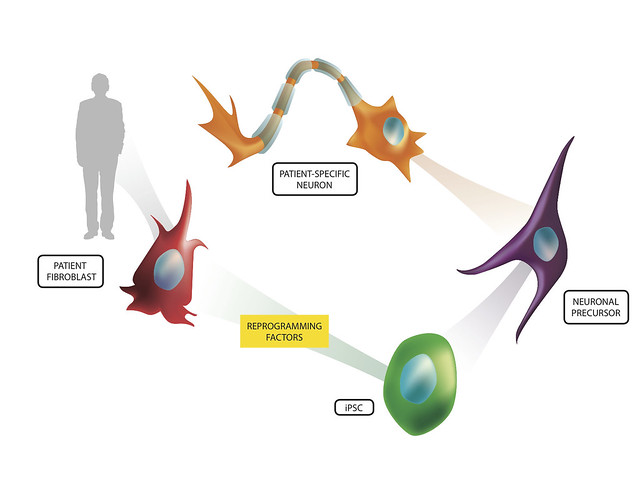
Stem cell research has generated promising and exciting results that could lead to treatment and cures for devastating diseases the medical community have been otherwise unable to treat. To some, the concept of stem cell treatment, though, was an ethical dilemma that shut the door on the seemingly endless possibilities these pluripotent cells could yield. Because of this, the discovery of induced pluripotent stem cells (iPSCs) was a very welcome discovery for the scientific community and the public. iPSCs are cells that once were well-differentiated (having a defined function in the body - i.e. skin cells), that are able to be coerced to 'going back in time' to obtain that pluripotent state seen in human embryonic stem cells (hESCs).

These iPSCs, once discovered, opened up those doors that ethical and moral questions shut for researchers. But, it was clear the iPSCs are different than hESCs and researchers had a fair bit of work in front of them to make sure that the iPSCs were at least comparable in the flexibility and thus utility of hESCs. This largely entailed experimenting with different environments and factors that the researchers would submit the cells to in order to create iPSCs. Eventually, researchers were able to derive iPSCs from more than just human skin cells (Yu et al, 2007), but other cells such as human urine cells (Zhou et al, 2012). As researchers have improved on these techniques, researchers like Morizane et al (2013) set out to investigate the quality of these iPSCs by injecting them into animals to investigate the utility of iPSCs as well as evaluate the benefits stem cells from one's own body may have on graft rejection or lack thereof.

In the study by Morizane et al (2013), the researchers used a primate model in order to evaluate the ability for autologous iPSCs and allogenic iPSCs to generate an immune response and engraft dopamine neurons in the primate midbrain. Like any other transplantation the immune system is an important player in the ability for the limb, cell, organ, etc. to engraft and become functional in the body. If recognized by certain immune cells in the body, the body can start attacking the transplant, reject it, and potentially damage the surrounding area in the process.
http://www.flickr.com/photos/lalande/6775578122/

Monday, September 30, 2013

Correlation between HLA alleles and pH1N1 mortality rates


            Many people have had the flu at last once in their life and see their doctors every year for a flu vaccination.  The vaccine is typically trivalent, which means that it protects against three different strains of the influenza virus: H1N1, H3N2, and an influenza B strain.  This vaccine is given as an intradermal shot meaning it is injected into the skin instead of the muscle2.  Seeing as how flu season is fast approaching I though it fitting to bring to light an article relating the flu, or more specifically the pandemic influenza A virus strain (pH1N1) of the 2009-2010 flu season.  However, before delving into the article I would like to provide the basic, necessary background information.

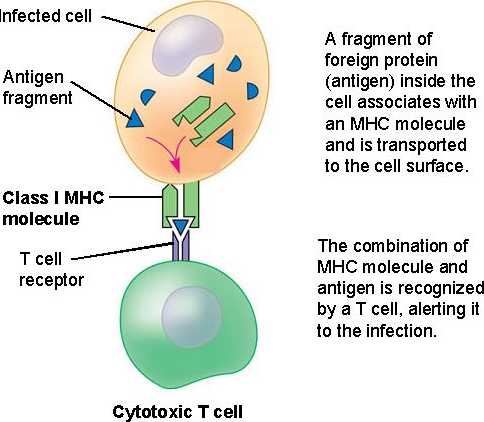
            When an antigen is engulfed by an antigen presenting cell (APC), its proteins are broken down and a small peptide chain of about 10 base pairs is expressed so that activated cytotoxic T-cells can destroy the infected cell3.  The proteins that express these peptides are called MHC (major histocompatabiltiy complex) class I and MHC class II proteins which are encoded by the human leukocyte antigen (HLA) gene3.  For MHC class I gene on HLA there are three regions: HLA-A, HLA-B, and HLA-C for which many different alleles exist3.  Some MHC alleles display the peptides for T-cell recognition better than others which is why different people have different immune responses to the same pathogen.  


Additionally, CD8+ is the specific receptor that MHC class I binds to on T-cells3.  Infected cells also release interferons (INFs) that increases the expression of MHC molecules which helps to fight off infection by causing more interactions with T-cells3.

The Power of the MHC

 HLA MHC Complex on

 Human Chromosome 6

Infectious diseases threaten us and our animals on a daily basis. However, inside the human body on chromosome 6, there is a group of genes that is essential for your protection and health. A May 2013 paper by Kubinak et al. examined viral evolution in the context of the major histocompatibility complex (MHC). The MHC is one of the most gene-dense regions in the vertebrate genome (Kubinak et al. 2013). Although in humans, it is only approximately 3600 kb in length, it contains roughly 224 genes, 40% of which have been found to have immunological functions (Garrigan 2003). Therefore, despite making up only 0.1% of the genome, it contains a disproportionate number of genes associated with immunity. It is evident that the MHC is crucial to the immune system.

Infectious and autoimmune diseases have been correlated to polymorphisms within the MHC. Polymorphisms are defined as different alleles of a gene existing in a population. The high levels of polymorphisms in the MHC are suggested to be due to co-evolution between host genotypes and pathogens. In other words, the “pathogen bad guys” evolve to avoid detection by the “good guys” in our bodies. The “good guys” respond though a process by which MHC genes encode cell surface proteins which bind and present peptide antigens (in the form of peptide MHC complexes) to T cells. A T cell mediated immune response (“good guys” spring into action) is then triggered if the antigen is recognized as foreign. Specifically, pathogen adaptation and virulence evolution seem to be locked in a battle with polymorphic antigen-presenting MHC genes for control of the health of the human body. It is primarily the interaction effect between the virus genotype and the host genotype that dictates variation in viral fitness and virulence, not the individual effects of virus genotype or host genotype (Table 1). This leads to specialization between a particular pathogen and host genotype.

Friday, September 20, 2013

Do T Cells Have A Need for Speed?


A recent study focuses on the time required for T cells to identify, interact with, and mount a response against pathogens within the human body.


The life of an infectious pathogen is not an easy one. Should a virus, bacterium, prion, or fungus manage to make it past the body’s first line of defense – obstacles including anatomical barriers such as the skin and physiological barriers like the hostile low pH environment of the stomach – it still must face a barrage of innate and adaptive immune responses before successfully establishing itself.  Once a pathogen has entered the body, the innate immune system – defined as the cells and mechanisms that defend the host against foreign organisms in a non-specific manner - may recognize the non-self intruder and induce an immune response. This eventually leads to the activation of the adaptive immune system and, in turn, of white blood cells like T and B lymphocytes (or T and B cells) which quickly identify and eliminate the pathogen. It is the accuracy and speed of these cells’ responses that makes the adaptive immune system so effective in protecting the body against infection. So the short answer is, yes, T cells do have a need for speed. To contest to this, a recent study now suggests that that once a T cell senses an antigen – a task that can take only a matter of seconds – it can decide the fate of the invading microorganism within minutes.

This new study, released in The Journal of Immunology just a few months ago, tested T cells under various conditions to judge their aptitude for identifying invading pathogens. According to the authors, there are four factors that limit the ability of T cell to recognize pathogens. These include: 
  1. T lymphocyte bears a single T cell receptor (TCR).  This means that any given T cell can only recognize a single antigen structure. Therefore T cells are very sensitive to interactions but are vastly outnumbered by antigen presenting cells (APCs)!
  2.  Thousands of proteins can be used to generate the peptide - major histocompatibility complex (pMHC) on the invading cell surface. The T cell must be able to quickly recognize one to a few of these intricate complexes on the cell to identify it.  
  3. Exposed cell pMHCs may differ by a few amino acids. Despite this, the TCR must still recognize them and be able to properly bind to trigger a T cell response.    
  4. The TCR and pMHC complex is only ~ 14 nanometers in length. One nanometeris one-billionth of a meter, so these are miniscule complexes that must somehow closely interact in a stable way. This interaction is strongly dependent on the tiny movements made by the T cell membrane.

These limiting factors require that we know two important things about T cells if we want to understand the speed and specificity of the antigen detection process. Firstly, we need to know the how often a T cell and an antigen presenting cell contact each other and for how long. Secondly, we need to know if and how T cell membrane motions are altered as a result of antigen detection.

Friday, December 16, 2011

Regulatory T Cell involvement with Maternal Fetal Tolerence

Pregnancy is an emotional time for mothers. The constant mood swings, cravings, and nesting syndrome makes the 9 months seem like a lifetime. While the mother is busy attending doctor’s appointments, setting up a nursery and attempting to be ready for a child, her body’s immune system is attempting to reconcile with the fetus growing inside the womb. The immune system sees this new life as a foreign invader attempting to overwhelm the body’s systems (which it kind of is). This is a sign that the immune system should attack and rid the body of the invader. However, if the immune system did this every time a woman got pregnant; our lineage would have ended with Eve. So we as humans have evolved ways to regulate the immune system during pregnancy in order to give birth to health babies. Different stages in pregnancy bring changes in cytokine production (the immune system’s messenger, of which there are many different kinds) to modulate the inflammatory response as needed (1). These changes in cytokine production then produce changes in the cells of the immune system, macrophages (collect debris), natural killer cells (does just what it sounds like it does, kills foreign cells), and regulatory T cells (regulates the other cells in the immune system) (2). Even though these regulatory actions exist there still exists evidence that the maternal immune system can and does respond to fetal antigen (fetal cells).
The presence of maternal antibody (the immune system’s detector) to major histocompatibility complex (MHC) (the complex that presents foreign material) suggests that CD4 T cells can participate in anti-fetal responses (2). A study on the modification of immune cells during pregnancy done by Elizabeth Bonney, examined spleen CD4 T cells of both normal mice and a unique CD4 T cell receptor transgenic mouse specific for the male antigen H-Y (a genetically mutated mouse that cause rejection of fetal material when mated with another H-Y mouse)(3). They found that during pregnancy, these transgenic CD4 T cells become activated and multiply in response to specific antigen and modulate the expression of the CD4 co-receptor (receptor that helps CD4 bind). This data suggest that during pregnancy this particular T cell pool is dynamic and further suggests that there is a specific mechanism of regulation that helps to maintain the coexistence between fetal tolerance and maternal T cell responsiveness.

Saturday, September 24, 2011

T Cell Receptors: Shaping up to Fight Infection

The human immune system has many different types of cells which form a well-organized and well -armed force that has the ability to combat almost any bacteria or virus which is trying to gain access to our bodies. Among its ranks, the immune system has an elite fighting force composed of T cells, members of a group of white blood cells known as lymphocytes, which plays a vital role in cell-mediated immunity. Cell-mediated simply means that unlike B cells which can secrete antibodies to target bacteria and viruses at a distance, T cells need to get up close and personal when dealing with pathogens. More specifically, T cells are involved primarily in combating viruses by using various mechanisms including target host cell killing and phagocytosis of free floating virus particles.
The chief mechanism used by T cells to combat various infections involves utilizing their unique T cell receptors (TCRs). These receptors allow T cells to identify specific foreign entities and eliminate them from the body. In order to accomplish this task, T cells must first be presented with a piece of the pathogen known as an antigen which can bind to the TCR. Depending on the tightness of the fit, or the affinity of the interaction, the TCR will either trigger the T cell to become activated or it will remain senescent. Due to the specificity of this interaction, the T cells which are generated are geared to combat specific pathogens. This in turn lays the foundation for an adaptive immune response.
Adaptive immunity is the part of our immune system which kicks in after an infection has bypassed our innate defenses such as our skin, the mucous in our nose, or the many white blood cells which combat pathogens nonspecifically. This type of immunity is adaptive because it produces a highly specialized response against a particular pathogen after the pathogen has already entered our bodies. In order for T cells to participate in an adaptive immune response they first must make the transition from a naïve T cell, which is one that has not interacted with a specific antigen, to a mature T cell, one that has contacted an antigen. The transition of a T cell from naivety to maturity is an area studied by Rashmi Kumar and her colleagues, and their findings were recently reported in the journal Immunity. Specifically, they examined the difference between T cell receptors (TCRs) on naïve and mature T cells in the hope of discovering the reason why memory T cells respond more rapidly and robustly when confronted with an antigen than do naïve T cells. A rapid T cell response is important for adaptive immunity because it allows for memory T cells, those that continue to circulate in our blood after an infection, to jump into action should the same pathogen try to infect a person twice.