-->
Showing posts with label vaccine. Show all posts

Friday, December 20, 2013

A New Vaccine to Protect Against Malaria


Malaria mosquito (4)
Malaria protozoan (5)
A New Vaccine to Protect 
Against Malaria


Malaria cases by country (6)
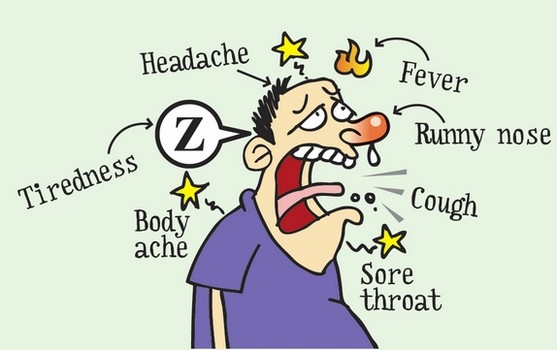
Malaria is a serious mosquito-borne illness that is present in tropical and sub-tropical countries all over the world. Roughly 3.3 billion people, almost half of the world’s population, live in areas where malaria is endemic (1). Malaria is caused by a unicellular eukaryotic organism called a protozoan. The protozoan that causes malaria, Plasmodium falciparum (Pf), replicates in human liver and red blood cells causing these cells to die. Uninfected mosquitos can then pick up the sporozoite by biting an infected person, thus propagating infection. Malaria causes high fevers, chills, and other flu-like symptoms, and can sometimes result in death (1).

Life cycle of plasmodium falciparum (7)
The protozoan that causes malaria is transmitted by mosquito bite as a sporozoite, an infectious form of the protozoan that is produced by asexual reproduction. Plasmodium falciparum lives in a mosquito’s mouth in the saliva, and when a human gets bitten, the sporozoites are transmitted to the human where they first replicate asexually in the liver and then spread to the blood and cause serious disease (1). In recent years many control interventions have been developed to attempt to reduce the number of cases of malaria; these include using bednets sprayed with insecticide in areas where malaria is endemic, spraying insecticides, and administering antimalarial drugs. Despite these efforts, in 2010 alone there were 220 million reported malaria cases, causing somewhere between 0.66 and 220 million deaths, the majority of those infections occurring in young children. Thus the current preventative measures are not sufficient; a vaccine against malaria will be the best method to combat malaria infections (2).

The most effective vaccine will be one that targets the sporozoite while humans are still asymptomatic; this is when the sporozoite has not yet spread from the liver to the blood (3). The World Health Organization has set a goal of obtaining a vaccine that is 80% effective by 2025. However, despite years of research and development, no current vaccines reach this level of efficacy. Currently the only way to confer protective immunity against malaria is by injecting people with inactivated sporozoites from >1000 mosquitos (the inactivation of the sporozoite is done by irradiation). Clearly, breeding this many mosquitos and isolating sporozoites from each one is not an optimal means of vaccination. As a result, a research group developed a way to grow radiation-attenuated Pf sporozoites (PfSPZ). The researchers attempted to vaccinate people subcutaneously, under the skin, but this method only caused minimal immune response and very low protective immunity. Recently however, the same group of researchers found that injecting PfSPZ intravenously (IV) provides protective immunity against malaria.  

The recent study used a vaccine with various doses of PfSPZ and injected it intravenously multiple times over the course of several weeks. The study participants, termed vacinees, were infected with controlled human malarial infection (CHMI), which involves giving a low dose of sporozoites and intervening with anti-malarial medications as soon as patients become symptomatic.  There were three study groups, with control individuals in each group whom did not receive the vaccine but were infected with CHMI. The three groups of vacinees received three different doses of PfSPZ, and varied in the number of vaccines of each dose administered. While protection was low in the group receiving the lowest dose, there was significant protection against malaria infection in the group receiving the highest dose of PfSPZ. In the group that received the highest concentration of PfSPZ per dose, 1.35 X 10⁵, and were administered the vaccine four or five times provided 66% and 100% protection against CHMI respectively. These results were promising, so the researchers then looked to see what types of immune responses were being elicited that were providing protection against CHMI.

Combined Immunotherapy as a means of stopping prolonged treatment with ART?


The HIV-1 virus has evolved to exploit the human immune system and counteract all immune defenses mounted against it.  Many different vaccination approaches and therapy treatments have been attempted to control, eliminate, or prevent HIV-1 infection, however, these attempts have not proved successful for virus elimination from the body. 
One approach that has been used to combat HIV-1 infection is the use of ART, or antiretroviral therapy, and this approach has proven to be effective at reducing viral levels in the blood.  ART suppresses HIV-1 viremia to undetectable levels within 12-48 weeks in a majority of patients.  This therapy is a “cocktail” or combination therapy of three or more drugs, including 2  nucleoside-based reverse transcriptase inhibitors (prevents production of the virus genome by inhibiting RNAàDNA transcription), and one or more of the following drugs: non-nucleoside reverse transcriptase inhibitors, membrane fusion inhibitors, viral protease inhibitors, or integrase inhibitors.  Each of these drugs targets a specific part of the viral lifecycle, making it unable to replicate and infect other cells.  Because each drug is mutually exclusive and targets a different area of the lifecycle, it is unlikely that a virus will develop resistance to all three drugs.  Therefore, because the virus does not produce escape mutants from the therapy, this approach is effective at reducing viral levels in the blood (ART information) (more on ART) However, by the time ART is put into effect, the virus has already established residence in T cells in the body, and can continue to infect other cells undetected by the drug by avoiding exposure in the blood via direct cell-to-cell infection.  Another problem with the use of ART for HIV-1 treatment is that it must be administered indefinitely, and if it is discontinued, there is a rapid rebound of viremia, or viral infection of the blood.  Taking ART indefinitely is undesired due to negative side effects (common ART side effects) and resistance to the drugs that develops overtime due to mutation.
Another approach to combat HIV-1 infection has been the use of monoclonal neutralizing anti-HIV-1 antibodies, however, in the past, these antibodies have proven to be ineffective at controlling infection of humanized mice (hu-mice) (Hu-mice as the murine model for the analysis of human hematolymphoid differentiation and function).  However, as of late, more potent antibodies have been uncovered that have decreased viremia in hu-mice and have longer half lives.  Antibodies that target gp120 glycoprotein in the HIV viral envelope have been studied as a potential means of neutralizing HIV infection.  Gp120 binds to CD4 on T cells, enabling initial viral-cell contact before membrane fusion and insertion of the viral genome (more on gp120). 
In a recent study conducted by Horwitz et al (2013) (published in the Proceedings of the National Academy of Sciences of the USA: HIV-1 Suppression and durable control by combining single broadling neutralizing antibodies (bNAbs) and antiretroviral drugs in humanized mice), three antibodies targeting different epitopes of gp120 were used in combination with ART and the effects were analyzed.  The three antibdies were 3BNC117 (a potent CD4 binding site antibody with a long half life), PG16 (which recognizes the V1/V2 loop region), and 10-1074 (which targets the base of the V3 stem). 

Monday, September 30, 2013

T-cells Found To Be Linked To Influenza Immunity – Could A Universal Vaccine Be On The Way?

Influenza, or more commonly referred to as the flu, is a highly contagious virus that affects the respiratory system. Because it is so contagious, it can affect thousands of people annually. In fact, somewhere between 5% and 20% of the United States population will contract the virus each year (2). However, despite its frequency of occurrence, the flu is not always a deadly disease. Of the people who are infected, there is an average of 200,000 hospital visits a year, and, depending on the strain, the number of flu-related deaths can range from 3,000 to 49,000 (2). The following fact is what makes the flu so dangerous though: the virus mutates every year. Every year doctors scramble to create a vaccine that will protect the public from the different flu strains that hit during flu season; they do not always make the appropriate vaccine, though, and that is when fatalities can accumulate. This leads to a pandemic.

The most recent influenza pandemic was the H1N1 virus that occurred in 2009. Also known as swine flu, this virus hospitalized thousands; everyone was caught off guard. On top of that, scientists found that symptoms varied drastically among similar individuals with the swine flu. Some people experienced no symptoms while some were hospitalized. This has shown with the other strains of influenza as well, and this was a question that scientists desperately were trying to find an answer to: What decides whether one is going to be asymptomatic? After the onset of the swine flu in 2009, a group of researchers at Imperial College London began a study hoping to answer this question, and the results that they found were groundbreaking.

Thursday, May 2, 2013

Knocking Out Breakbone Fever: New Mammalian Transmission Model for Dengue Virus


A recent study uses several varieties of knockout mice to develop a dengue fever transmission model. This approach could greatly contribute to knowledge of transmission between vertebrate hosts and the dengue virus vector, the Aedes mosquito. 


         Agonizing muscle and joint pains. Measles-like skin rashes. Sudden-onset high fever. Severe headaches. With symptoms such as these there is little wondering why dengue fever is so feared. Even more concerning is that cases of dengue fever have been spreading into new geographic regions; a result of increased population density, international travel, habitat development, environmental change, and a plethora of other factors. Additionally, with no approved vaccine for dengue virus currently on the market, it has become of utmost importance to gain a better knowledge of the entomological, virological and immunological components of infection establishment and transmission to prevent its spread. 

          Dengue fever and the more severe conditions it can cause –like dengue shock syndrome and dengue hemorrhagic fever - are a result of infection by dengue virus, a single positive-stranded RNA flavivirus. It is the most common arboviral (viruses that are transmitted by arthropods) infection of humans. The dengue virus vector - the organism that transmits the virus to another organism - is the mosquito Aedes aegypti, a species that originated in Africa. However, the range of this vector has dramatically spread over the past few decades and can now be found in most tropical and sub-tropical regions. The ability of this vector to move into new regions is one of the primary reasons that dengue fever epidemics are now regularly occurring in southeast Asia, India, the western Pacific and much of South America. 

         Even with dengue fever becoming a severe global threat, the study of the disease has been neglected. This is partially a result because of how difficult dengue virus is to study, as result of the lack of a good vertebrate transmission model. While it has been found that mice can get infected in lab settings, they don't get sick in any way which limits the usefulness of mouse models to the study of dengue virus replication. As a result, much research into dengue vaccines has been limited as few are willing to jump into clinical trials with a product that has yet to be animal tested. 

         However, a lab at the Louisiana State University in Baton Rouge might have found the solution to this problem. Using an array of genetic technologies it is possible to target and "knock out" specific mouse genes, allowing researchers to replace existing genes with altered versions. Using this technique, several varieties of knockout mice deficient in type I and II interferon receptors have been developed. By decreasing the response of interferons, the proteins that drive transcription to activate an antiviral response, researchers suspected that they could increase the permissiveness of cells to dengue fever and allow for increased virus transmission. The knock-out mice were inoculated with a non-mouse adapted dengue virus and tested for viral load and cytokine production daily. In addition, the mice were exposed to mosquitoes that were fed the same virus strain via an artificial membrane feeder. Finally, uninfected mosquitos were allowed to forage on dengue virus infected mice to determine if the mosquitos could contract the virus from the mammalian host.