-->
Showing posts with label influenza. Show all posts

Monday, September 30, 2013

T-cells Found To Be Linked To Influenza Immunity – Could A Universal Vaccine Be On The Way?

Influenza, or more commonly referred to as the flu, is a highly contagious virus that affects the respiratory system. Because it is so contagious, it can affect thousands of people annually. In fact, somewhere between 5% and 20% of the United States population will contract the virus each year (2). However, despite its frequency of occurrence, the flu is not always a deadly disease. Of the people who are infected, there is an average of 200,000 hospital visits a year, and, depending on the strain, the number of flu-related deaths can range from 3,000 to 49,000 (2). The following fact is what makes the flu so dangerous though: the virus mutates every year. Every year doctors scramble to create a vaccine that will protect the public from the different flu strains that hit during flu season; they do not always make the appropriate vaccine, though, and that is when fatalities can accumulate. This leads to a pandemic.
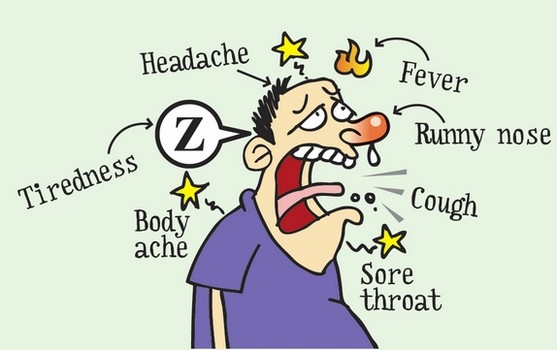
The most recent influenza pandemic was the H1N1 virus that occurred in 2009. Also known as swine flu, this virus hospitalized thousands; everyone was caught off guard. On top of that, scientists found that symptoms varied drastically among similar individuals with the swine flu. Some people experienced no symptoms while some were hospitalized. This has shown with the other strains of influenza as well, and this was a question that scientists desperately were trying to find an answer to: What decides whether one is going to be asymptomatic? After the onset of the swine flu in 2009, a group of researchers at Imperial College London began a study hoping to answer this question, and the results that they found were groundbreaking.
Correlation between HLA alleles and pH1N1 mortality rates


            Many people have had the flu at last once in their life and see their doctors every year for a flu vaccination.  The vaccine is typically trivalent, which means that it protects against three different strains of the influenza virus: H1N1, H3N2, and an influenza B strain.  This vaccine is given as an intradermal shot meaning it is injected into the skin instead of the muscle2.  Seeing as how flu season is fast approaching I though it fitting to bring to light an article relating the flu, or more specifically the pandemic influenza A virus strain (pH1N1) of the 2009-2010 flu season.  However, before delving into the article I would like to provide the basic, necessary background information.

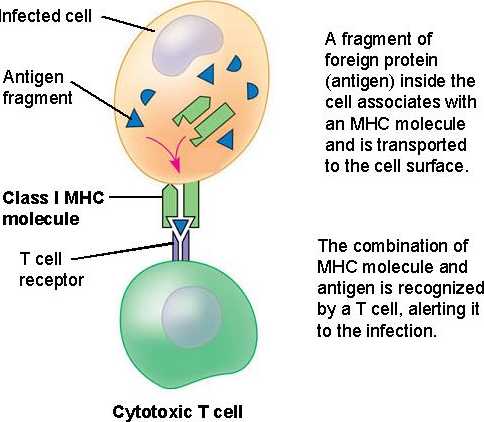
            When an antigen is engulfed by an antigen presenting cell (APC), its proteins are broken down and a small peptide chain of about 10 base pairs is expressed so that activated cytotoxic T-cells can destroy the infected cell3.  The proteins that express these peptides are called MHC (major histocompatabiltiy complex) class I and MHC class II proteins which are encoded by the human leukocyte antigen (HLA) gene3.  For MHC class I gene on HLA there are three regions: HLA-A, HLA-B, and HLA-C for which many different alleles exist3.  Some MHC alleles display the peptides for T-cell recognition better than others which is why different people have different immune responses to the same pathogen.  


Additionally, CD8+ is the specific receptor that MHC class I binds to on T-cells3.  Infected cells also release interferons (INFs) that increases the expression of MHC molecules which helps to fight off infection by causing more interactions with T-cells3.

Sunday, April 28, 2013

Is the flu shot worth it?

Have you ever received a flu shot (thinking you'd get through flu season unscathed), only to come down with the characteristic fever, sore throat, and lethargy along with everyone else? Why did you still get the flu? Or, has your doctor ever recommended the flu shot with the disclaimer that this season's flu shot may only serve to lessen symptoms, and that you shouldn't count on being fully immune? Don't blame the doctors, and don't blame the scientists: as it turns out, we are in an ever 'one-step-behind' race with influenza.

The ability of the flu to rapidly mutate is the reason behind our inability to eliminate the occasional but consistent flu pandemic; with a high error rate due to RNA polymerase's lack of endonuclease proofreading ability (the flu is an RNA virus), everything in the flu genome mutates at rates higher than our own DNA, and many other viruses (1). For a similar host immune-evasion reason, HIV has proven extremely difficult to eradicate. While HIV antiretroviral treatments have successfully targeted the virus at a multitude of steps in its replication cycle (2), virtually indefinitely preventing progression to AIDS, it is a latent virus, and so cessation of medication leads to resumption of particle manufacture. Thankfully, influenza is an acute virus, and so as quickly as it comes, it goes. However, symptoms of the flu can be very taxing on the human body, ranging from high fevers to nasal discharge/sneezing/general respiratory problems (3) to sometimes unrecoverable weight loss (at least in ferret models); in some cases, vulnerable groups may even die if infected. We would hope that the vaccines that we create to protect ourselves from this ravaging bug would be highly successful in attenuating the severity of these symptoms, and even better, prevent us from acquiring the virus altogether. However, the ability of the flu to evade our immune systems through mutation of its immunogenic properties makes creation of the perfect flu shot, a long shot.

Influenza has two surface proteins, hemagglutinin (HA) and neuraminidase (NA) (3); flu strains are classified according to the specific combination of these surface molecules. For example, the H1N1 strain contains H1 and N1 isotypes of HA and NA respectively. Since HA has been shown to play an important role in the flu virus's ability to enter a cell, a hosts ability to create antibodies against a specific HA molecule often correlates positively with immunity to that specific strain (or homologous strains). Thus, in creating a vaccine, it is reasonable to use an attenuated, recent flu strain isolate in an attempt to stimulate host HA antibody production for immunity against similar/future strains. However, rapid mutation of the virus quickly out-dates our vaccines, and sometimes we are just unable to keep up.

Wednesday, April 24, 2013

An Emerging Influenza Vaccine


            Throughout history, the influenza virus has proven to be highly problematic for human beings.  Various epidemics have spread across the globe and taken many lives, including the recent avian flu (H5N1) and swine flu (H1N1).  While the virus itself does cause a lot of harm, it is often pneumonia caused by Staphylococcus aureus (S. aureus), which results from the influenza infection, that often proves to be fatal (1).  Virologists have been looking for a vaccine that would help not only to prevent influenza infection, but also to deter S. aureus infection.  In their journal article, Dai et al. explain how they found a conserved section of the protein HA which can be made into a vaccine and coupled with the bacterial antigen Ag85A to do just that.

            The HA protein in Influenza A Virus (IAV) holds domains necessary for viral attachment to host cells.  To activate this protein, the virus cleaves it into two domains: HA1 and HA2.  The host often deploys an immune response that targets antibodies to the HA protein, which prevents IAV virions from attaching to the host cells (2).  While this is temporarily affective, IAV tends to evolve very rapidly, so vaccines geared towards the HA protein become outdated very quickly (3).  However, the HA2 domain has been seen to remain highly conserved over virus generations, and the majority of the mutations can be attributed to the HA1 region.  Therefore, it seems reasonable that if antibodies were made to target the HA2 region specifically, then they would be able to be effective for longer periods of time (4).

            Ag85A is an antigen secreted by the bacteria Mycobacterium tuberculosis (M. tuberculosis).  As a vaccine, Ag85A was known to increase the production of T helper 1 (TH1) cytokine responses to M. tuberculosis (5), which in turn lead to an increase in the expression of toll-like receptor 2 (TLR2).  TLR2 recognizes molecules specific to Staphylococcus species and activates immune responses to them (6).  Therefore, Ag85A could act as a vaccine for S. aureus.  Dai et al. hypothesized that combining the HA2 domain of the HA protein and Ag85A into a single vaccine would create both an effective antibody response to IAV and antibacterial response to S. aureus, preventing both influenza and the potentially lethal pneumonia that tends to follow.

Monday, December 5, 2011

Mind Your Memory: Modulation of Memory T Cell Generation During Influenza Infection


We have all heard of people complaining from their flu-like symptoms, but few people actually comprehend what influenza is. There are actually two main kinds of influenza viruses, Type A and B, that are responsible for the seasonal flu epidemics that happen each year. Viruses themselves are infectious agents that need host cells in order to reproduce. During a viral infection, cells called CD8+ T cells recognize antigens (that were originally part of a pathogen). This causes them to multiply into large numbers of CD8+ T cells that are specific for that antigen. These CD8+ T cells can help to eradicate the virus by secreting molecules that can kill infected target cells. Eventually these numbers of CD8+ T cells decrease and a small population of antigen-specific memory T cells can be left behind. These memory cells are a great asset to the immune system because if the same pathogen attacks the body for a second time and the same antigens are presented, the immune system can activate these cells to mount a stronger and faster response than what was observed upon the pathogen’s initial assault. The generation of memory T cells is also important for the generation of vaccines designed to prevent serious infection by a pathogen. Vaccines often contained a killed, inactivated, or weakened form of a pathogen so that a recipient’s body can recognize the pathogen’s antigens as foreign, combat them, and then generate memory CD8+ T cells to “remember” the antigens for future encounters so that they can be fought off more effectively.
It is important to note that vaccines are especially important for protection against the influenza virus because this virus mutates and changes over time. Initial exposure to an influenza virus may not confer protection upon a second exposure of this influenza virus because the second exposure may involve a different strain of influenza for which no CD8+ memory cells had been generated. This is also why it has been impossible to create a vaccine that grants a person lifelong immunity. Instead, annual vaccine programs are undertaken to generate memory CD8+ T cells against the strains of the virus that are most likely to cause illness.

Sunday, December 4, 2011

Newly Recognized Lung-specific Memory T Cells Afford Greater Protection Against Influenza Virus

Every year, millions of people across the world become infected by the influenza virus, resulting in an average of between 250,000 and 500,000 fatalities annually, and over $80 billion in costs in the United States alone. Current seasonal influenza vaccines consist of three different, common strains of inactivated influenza virus. These inactivated viruses cannot replicate or cause pathogenic infection, but the viral proteins are recognized by the host immune system and evoke an immune response that leads to generation of specific cells that have greater efficiency in clearing the virus upon second exposure. Current research is thus focused on potential vaccines and treatments that can augment the immune response to favor generation of cells with the best ability to clear influenza viral infection.
At the molecular level, viral flu proteins are recognized by receptors on host immune cells called dendritic cells (DCs) or other antigen-presenting cells, which present small bits of viral protein to T cells, which subsequently become “activated” and await second exposure to the virus. Some T cells with particularly high antigen-specificity (in other words, T cells with receptors that bind with optimal affinity to particular influenza viral antigen) differentiate into memory T cells, which “remember” a specific antigen and are able to produce a faster, more efficient immune response upon subsequent exposure. In this case, the memory T cells effectuate a clearance of the virus through several mechanisms, including production of proteins called cytokines, many of which induce inflammation to help clear viral infection. A specific class of T cells called helper T cells, or CD4 T cells, has been demonstrated to be particularly helpful in the immune response against viral infection because of their particular subset of secreted cytokines. A paper published just this month in The Journal of Immunology by Teijaro and colleagues describes a newly identified class of lung tissue-resident memory CD4 T cells with enhanced ability to provide protection during respiratory viral infection. The authors utilized several distinct mouse models to demonstrate T cell retention in the lung after influenza virus infection and increased protection from morbidity from the virus.